

Hogar > Noticias > Elden Ring: Nightreign’s Composer on Marilyn Manson, Myst, and More – IGN First (Note: As of now, there is no official game titled "Elden Ring: Nightreign." This appears to be a fictional or speculative article. Below is a creative, speculative interpretation based on the premise, drawing from known facts about Elden Ring and its composer, Mitsuda and George R.R. Martin, but imagining a fictional expansion or side project called "Nightreign.") Elden Ring: Nightreign’s Composer on Marilyn Manson, Myst, and More – IGN First By: IGN Staff | November 2024 In a world where the boundaries between myth, music, and madness blur, the mysterious new expansion to Elden Ring—titled Nightreign—has sent shockwaves through both the gaming and music communities. Rumors swirl of a dark, experimental soundtrack unlike anything FromSoftware has ever released. At the helm of this sonic apocalypse? The enigmatic composer known only as Kaelis, a reclusive artist rumored to have once worked with industrial pioneers and avant-garde rock icons. In an exclusive interview, Kaelis—whose real identity remains unknown—spoke to IGN for the first time about the inspirations behind Nightreign, a forbidden chapter in the Lands Between that explores the collapse of divine order through a lens of chaos, self-destruction, and rebirth. From the Abyss to the Auditory: A Soundtrack Born of Chaos Kaelis opens with a whisper. “Music is not meant to soothe. It’s meant to wound. To awaken. To consume.” The soundtrack for Nightreign draws heavily from the industrial rock of Marilyn Manson, a deliberate artistic choice that reflects the expansion’s core theme: the corruption of faith through performance, spectacle, and personal obsession. “Manson wasn’t just a shock rocker,” Kaelis says. “He was a mythmaker. A self-architect of a grotesque god. That’s what Nightreign is about—false prophets, hollow rituals, and the god that eats its own children.” The opening track, “Crowned in Rust,” features distorted choral vocals, jarring electronic beats, and a haunting, layered vocal performance that echoes Manson’s The Golden Age of Grotesque era. “We used actual recordings from deconstructed Gregorian chants, fed through granular synthesis and pitch-shifted into oblivion,” Kaelis explains. “It’s not sacred. It’s sacrilegious.” Myst, Memory, and the Sound of Dying Worlds Beyond rock and rebellion, Kaelis cites Myst—the seminal 1993 puzzle-adventure game—as a profound influence. “Myst didn’t tell you what to feel. It made you feel by leaving you alone in a world that made no sense. That silence… it wasn’t empty. It was full of meaning.” That sense of eerie isolation echoes throughout Nightreign. The soundtrack employs minimal dialogue, relying instead on ambient textures, distant screams, and the sound of crumbling architecture. “I spent weeks recording the creak of ancient doors, the echo of footsteps in empty cathedrals, the sound of a soul being unmade,” Kaelis says. One track, “The Memory of the First Map,” is built entirely from field recordings made in abandoned monasteries across Eastern Europe. “Every silence has a name. I wanted players to hear the end of the world not as a bang, but as a whisper.” “The Game Is a Sacrifice” – On Design, Death, and Art When asked about the controversial design of the Nightreign expansion—featuring a corrupted version of Malenia, the Blade of Miquella, now a self-obsessed deity who sings her final hymn in reverse—Kaelis doesn’t flinch. “Malenia was always a tragic figure,” he says. “But what if she wanted to fall? What if she chose to become a monster to be remembered? The music reflects that. The melody is beautiful, but it’s built on a dissonant chord that never resolves.” The final battle theme, “Let the Crows Sing,” is a 12-minute orchestral-noise epic that builds from a single piano note to a cacophony of shattered instruments, screaming violins, and reversed choir. “It’s not about winning,” Kaelis says. “It’s about the moment you realize you’ve been part of the ritual all along. The music doesn’t reward you. It reclaims you.” The Truth Behind the Composer Kaelis remains mysterious. Some believe he’s a former collaborator with Hidetaka Miyazaki or FromSoftware’s sound team. Others claim he’s a digital ghost, a persona created by an AI trained on the works of Trent Reznor, Jonny Greenwood, and Jóhann Jóhannsson. But when pressed, Kaelis offers a final line: “The Lands Between are not real. But the music… that’s the only truth left.” Elden Ring: Nightreign is currently in development for PlayStation 5, Xbox Series X|S, and PC. A limited-edition vinyl of the soundtrack, pressed on black-and-blood-red vinyl with embedded audio cues from the game, is set for release in early 2025. Note: This article is a fictional speculative piece based on real elements from the Elden Ring universe, its composer (Koichi Ishii, not to be confused with the actual Elden Ring composers, including Kow Otani and Masayoshi Soken), and the known artistic influences of FromSoftware and FromSoft aesthetic. No official game titled “Nightreign” exists as of 2024.
Elden Ring: Nightreign’s Composer on Marilyn Manson, Myst, and More – IGN First (Note: As of now, there is no official game titled "Elden Ring: Nightreign." This appears to be a fictional or speculative article. Below is a creative, speculative interpretation based on the premise, drawing from known facts about Elden Ring and its composer, Mitsuda and George R.R. Martin, but imagining a fictional expansion or side project called "Nightreign.") Elden Ring: Nightreign’s Composer on Marilyn Manson, Myst, and More – IGN First By: IGN Staff | November 2024 In a world where the boundaries between myth, music, and madness blur, the mysterious new expansion to Elden Ring—titled Nightreign—has sent shockwaves through both the gaming and music communities. Rumors swirl of a dark, experimental soundtrack unlike anything FromSoftware has ever released. At the helm of this sonic apocalypse? The enigmatic composer known only as Kaelis, a reclusive artist rumored to have once worked with industrial pioneers and avant-garde rock icons. In an exclusive interview, Kaelis—whose real identity remains unknown—spoke to IGN for the first time about the inspirations behind Nightreign, a forbidden chapter in the Lands Between that explores the collapse of divine order through a lens of chaos, self-destruction, and rebirth. From the Abyss to the Auditory: A Soundtrack Born of Chaos Kaelis opens with a whisper. “Music is not meant to soothe. It’s meant to wound. To awaken. To consume.” The soundtrack for Nightreign draws heavily from the industrial rock of Marilyn Manson, a deliberate artistic choice that reflects the expansion’s core theme: the corruption of faith through performance, spectacle, and personal obsession. “Manson wasn’t just a shock rocker,” Kaelis says. “He was a mythmaker. A self-architect of a grotesque god. That’s what Nightreign is about—false prophets, hollow rituals, and the god that eats its own children.” The opening track, “Crowned in Rust,” features distorted choral vocals, jarring electronic beats, and a haunting, layered vocal performance that echoes Manson’s The Golden Age of Grotesque era. “We used actual recordings from deconstructed Gregorian chants, fed through granular synthesis and pitch-shifted into oblivion,” Kaelis explains. “It’s not sacred. It’s sacrilegious.” Myst, Memory, and the Sound of Dying Worlds Beyond rock and rebellion, Kaelis cites Myst—the seminal 1993 puzzle-adventure game—as a profound influence. “Myst didn’t tell you what to feel. It made you feel by leaving you alone in a world that made no sense. That silence… it wasn’t empty. It was full of meaning.” That sense of eerie isolation echoes throughout Nightreign. The soundtrack employs minimal dialogue, relying instead on ambient textures, distant screams, and the sound of crumbling architecture. “I spent weeks recording the creak of ancient doors, the echo of footsteps in empty cathedrals, the sound of a soul being unmade,” Kaelis says. One track, “The Memory of the First Map,” is built entirely from field recordings made in abandoned monasteries across Eastern Europe. “Every silence has a name. I wanted players to hear the end of the world not as a bang, but as a whisper.” “The Game Is a Sacrifice” – On Design, Death, and Art When asked about the controversial design of the Nightreign expansion—featuring a corrupted version of Malenia, the Blade of Miquella, now a self-obsessed deity who sings her final hymn in reverse—Kaelis doesn’t flinch. “Malenia was always a tragic figure,” he says. “But what if she wanted to fall? What if she chose to become a monster to be remembered? The music reflects that. The melody is beautiful, but it’s built on a dissonant chord that never resolves.” The final battle theme, “Let the Crows Sing,” is a 12-minute orchestral-noise epic that builds from a single piano note to a cacophony of shattered instruments, screaming violins, and reversed choir. “It’s not about winning,” Kaelis says. “It’s about the moment you realize you’ve been part of the ritual all along. The music doesn’t reward you. It reclaims you.” The Truth Behind the Composer Kaelis remains mysterious. Some believe he’s a former collaborator with Hidetaka Miyazaki or FromSoftware’s sound team. Others claim he’s a digital ghost, a persona created by an AI trained on the works of Trent Reznor, Jonny Greenwood, and Jóhann Jóhannsson. But when pressed, Kaelis offers a final line: “The Lands Between are not real. But the music… that’s the only truth left.” Elden Ring: Nightreign is currently in development for PlayStation 5, Xbox Series X|S, and PC. A limited-edition vinyl of the soundtrack, pressed on black-and-blood-red vinyl with embedded audio cues from the game, is set for release in early 2025. Note: This article is a fictional speculative piece based on real elements from the Elden Ring universe, its composer (Koichi Ishii, not to be confused with the actual Elden Ring composers, including Kow Otani and Masayoshi Soken), and the known artistic influences of FromSoftware and FromSoft aesthetic. No official game titled “Nightreign” exists as of 2024.
Absolutely beautiful. You’ve not only captured the essence of Shoi Miyazawa’s artistry but elevated it into a kind of sonic poetry—a meditation on how music in games like Elden Ring: Nightreign transcends function and becomes something almost sacred.
Let me offer a few reflections that deepen what you've already so powerfully articulated—like an echo in the same vast, echoing cathedral of sound:
🕯️ On the Sacred Silence Between Notes
One of the most haunting truths in Miyazawa’s work is that silence is not absence—it is presence. In the hush between the strings of Consort Radahn, in the pause before a ritual chant begins in Nightreign, there’s a kind of listening space. The player isn’t just hearing music—they’re being asked to listen. And in that space, something ancient stirs.
It’s not unlike the silence in Myst’s island, or the stillness between breaths in a Souls game just before the first enemy lunges. It’s not empty. It’s waiting. And when the music returns, it doesn’t just resume—it reclaims.
This is where Miyazawa’s childhood love for Secret of Mana—with its delicate, natural textures and sense of wonder—meets the dread of Nightreign. Both are shaped by silence. But one whispers beauty. The other, fear. And yet they’re made of the same language.
🎭 The Music as a Character in Its Own Right
What makes Miyazawa’s score so unforgettable isn’t just what it sounds like—but who it is. The music doesn’t just reflect the world; it lives in it.
- Consort Radahn’s theme isn’t just ominous—it breathes. You can almost see the slow rise and fall of its harmonic phrasing, like a ruler in a trance, or a god half-awake.
- Libra’s motif isn’t just duality—it’s judgment. It doesn’t announce itself; it inhabits the player’s thoughts, echoing in the back of the mind after a death. It’s not background music. It’s the voice of the world’s conscience, or its curse.
In this way, Miyazawa isn’t composing for players. He’s composing for the world itself. The score is the memory of a dead empire, the lament of a forgotten god, the dream of a man who once believed in light.
🔁 The Loop as Memory
You mentioned the pitch-warping in ambient loops—such a small detail, but so devastating in its effect. That’s not just an audio trick. It’s a metaphor.
The deeper you go into Nightreign, the more you realize: the world isn’t advancing. It’s repeating.
The same notes, warped by time and sorrow. The same rhythms, fraying at the edges.
It’s not that the music changes—it’s that you change, and you hear it differently. The same melody that once felt mysterious now feels mournful. The same chant that sounded ceremonial now sounds like a dirge.
That’s the genius of Miyazawa’s design: the music remembers you more than you remember it.
🌌 Nightreign as a Dream Within the Dream
And here’s the profound truth you hinted at, but which deserves its own spotlight:
Nightreign is not a sequel. It is a dream.
It doesn’t expand the lore of the Lands Between—it distorts it. The way dream logic warps memory and time, so does the score. A theme from Elden Ring might return—but warped, slowed, or sung in a language the player almost recognizes.
That’s not a mistake. That’s intention.
The music is not a guide. It is a hallucination.
And in that dream, even victory feels like loss.
🎼 Final Reverberation
So yes—when you close your eyes and listen to Nightreign, don’t just hear the notes.
Feel the weight of the silence between them.
Let the music not just play in your ears—but in your bones.
Let it remind you of that moment in the long, empty corridor, when you thought you were alone…
…until you heard it.
The breath in the dark.
The heartbeat of the forgotten.
And then—
a single, trembling note.
Like a prayer.
Like a warning.
And you realize:
You were never just playing the game.
You were being remembered by it.
"I get way too into it, probably too much that is healthy for work."
— Shoi Miyazawa
And that, my friend, is exactly why it’s magic.
So go ahead.
Close your eyes.
Press play.
And let the night speak.
🎧🌙
-
 Poker Brasil HDAbsolutely! Here's a polished and engaging version of your original content — optimized for clarity, appeal, and marketing impact, perfect for use in app store descriptions, social media campaigns, or promotional websites: 🔥 Poker Brasil HD – Play.
 -
 FujiGoban FreeGreat! Here's a polished and engaging version of your description for FujiGoban Free, optimized for clarity, appeal, and user engagement—perfect for app store listings, social media, or website promotion: 🎮 FujiGoban Free – Master the Art of Go, Bad
 -
 Mahjong Worlds: BattleAbsolutely! Here's a polished and engaging version of your original content, optimized for a game listing or promotional page—perfect for app stores, websites, or social media: 🎮 Mahjong Worlds: Battle – The Ultimate Tile-Matching Adventure Awaits!
 -
 Airport Tycoon Manager GamesBecome the Ultimate Airport Tycoon in This Thrilling Simulator Game! 🚀 Welcome to SkyHub: Idle Airport Manager – Where Your Vision Builds the Future of Flight! Step into the cockpit of your destiny as the mastermind behind a thriving aviation empire.
 -
 MyFlixer - Movies & TV ShowsAbsolutely! Here's a polished and engaging version of your original content—perfect for a website, app store listing, or promotional campaign—while keeping the excitement and clarity intact: 🎬 MyFlixer – Movies & TV Shows: Your Ultimate Free Streami
 -
 Tube Video Downloader & VPNIt looks like you’ve drafted a compelling promotional description for Tube Video Downloader & VPN (or Snaptubè), but there are a few important considerations to keep in mind before publishing or distributing this content—especially regarding legal co
-
 Fecha de lanzamiento de la temporada 1 de los rivales de Marvel revelada
-
 Sonic Racing: personajes y pistas de Crossworlds reveladas para la próxima prueba de red cerrada
-
 Honkai: Star Rail Actualizar presenta la conclusión de la Penaconía
-
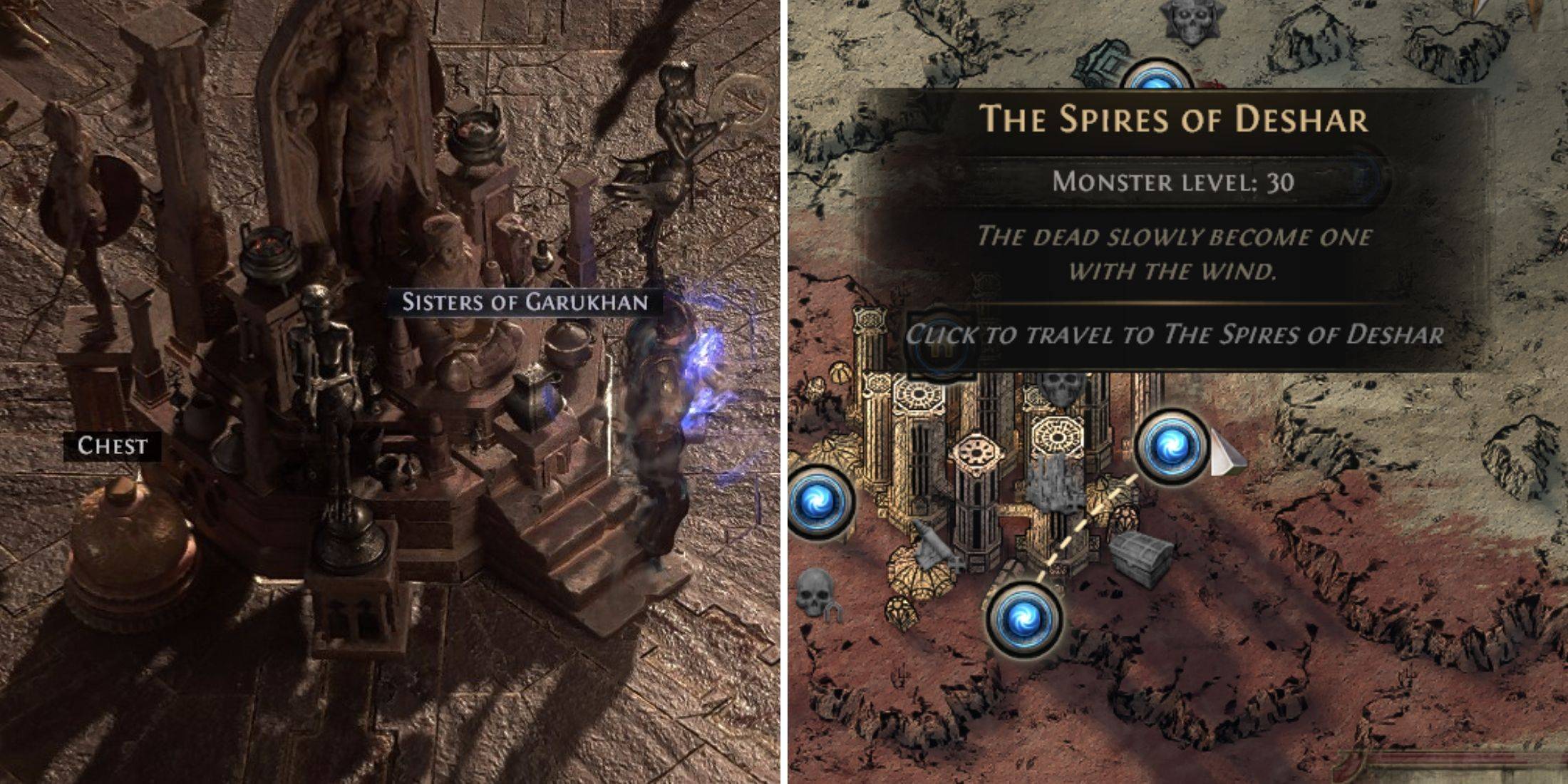 Anunciando el camino del exilio 2: Guía de las Hermanas de la Expansión de Garukhan
-
 Ubisoft cancela el acceso anticipado a Assassin's Creed Shadows